

What Is Boarding Up? A Plain Guide for Horsham Property Owners
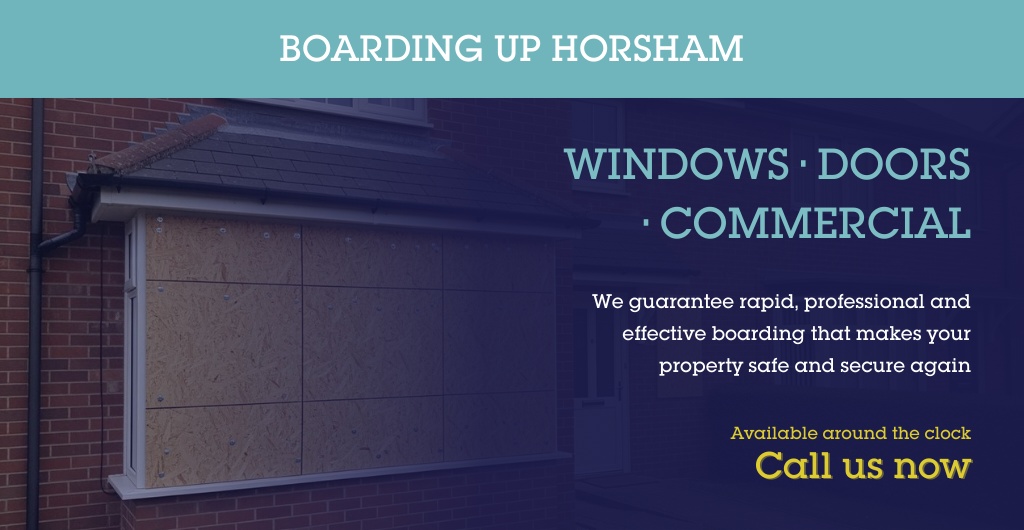
Boarding up is the temporary securing of a damaged or vulnerable opening, such as a broken window, a forced door, a smashed shopfront or a hole in a roof, by fixing a solid panel over it. In Horsham, as anywhere, it’s the step that makes a property safe, weathertight and harder to enter while you arrange the permanent repair. It’s a make-safe, not a fix, and that’s exactly its value: it buys you time to get the right glazier, joiner or roofer in properly.
This page explains what boarding up does, the materials and fixings involved, when different openings need it, and what you’re left with afterwards.
What boarding up actually does
A boarded opening does three jobs at once:
- Keeps people out. A properly fixed board closes off the gap that a broken window or damaged door leaves behind, so the property can be left unattended.
- Keeps weather out. Rain and wind through a broken pane or a hole in the roof can do more harm than the original damage. A board stops that getting worse.
- Removes immediate hazards. Part of making an opening safe is dealing with loose or hanging glass and clearing debris from the area, so nobody walking past or living there gets hurt.
It also gives you a clear, documented record of the damage and the work done, which matters if you’re making an insurance claim.
How does boarding up protect an opening?
The principle is simple: a panel larger than the opening is fixed securely to the surrounding frame or structure, so it can’t be pushed in, prised off or lifted by the wind. The detail is in choosing the right board and the right fixing for that particular opening.
Plywood or OSB?
These are the two materials you’ll usually hear about.
- Exterior-grade plywood, typically 18mm thick, is the standard choice for most windows, doors and shopfronts. It’s strong, stands up to weather and is difficult to break through.
- OSB (oriented strand board) is a practical option for smaller openings, where a lighter board does the job perfectly well.
Board thickness and type depend on the size of the opening, how exposed it is and how long it’s likely to stay in place before the permanent repair. A small broken pane at the back of a house and a large ground-floor shop window facing the street are not the same job.
Fixings
How the board is fixed matters as much as the board itself.
- Security or anti-tamper fixings are used where the board needs to resist someone trying to remove it, which is common on ground-floor and street-facing openings.
- Non-destructive fixing is used where the frame allows it, so the board can be removed later with as little extra damage to the frame as possible. That makes life easier for whoever carries out the permanent repair.
When the frame is badly damaged
A board is only as secure as what it’s fixed to. If a window frame is split or a door frame has been forced away from the wall, there may not be sound material to fix into. In that case we explain the options before starting, because securing a damaged door or frame first can change what’s needed and how long it takes. You’ll know what’s proposed and why before anything goes up.
When different openings need boarding
The method is broadly the same, but each type of opening has its own practicalities.
Windows. Broken glass from accidental damage, a break-in or storm debris is the most common reason people need boarding. Upper-floor windows add questions about height and ladder access. Our window boarding service covers this in more detail.
Doors. After forced entry, a door may be split, the lock may be broken or the frame may be damaged. Often the door and frame need securing before boarding can be fixed properly, so the property can be closed up.
Shopfronts and commercial premises. Large panes and wide frontages need bigger boards and careful fixing. Horsham’s town centre is a good example of why no two jobs are alike: around the Carfax you’ll find three-storey Victorian buildings, traditional timber buildings, post-war blocks and modern retail units side by side, each with different frames and fixing points. See shopfront boarding for how we approach commercial openings.
Roofs and skylights. A broken skylight or a section of damaged roof lets weather straight in. These jobs depend heavily on safe access, and they’re assessed on the call before anyone goes up. Please don’t climb onto a roof yourself to check. Our roof and skylight boarding page explains more.
Empty properties. Landlords and agents sometimes board the windows and doors of vacant properties to keep them secure between tenancies or during works, rather than after any damage at all.
Temporary property securing, not a permanent repair
Boarding is designed to hold the property safely until the permanent work is done: new glazing, a replacement door, or a roof repair by the relevant trade. Once that’s arranged, the boards come down and the property is back to normal. The aim throughout is to leave you secure now and ready for that next step.
What you receive
When the work is complete, you have:
- the agreed openings made safe and secured
- an itemised invoice
- time-stamped before and after photographs
- a written statement of the work done
That paperwork is designed to support an insurance claim, though the insurer decides what’s covered. Our insurance claims guide explains how to use it. If the damage followed a break-in, report it to the police, keep the crime reference number and contact your insurer.
How the cost is worked out
There are no set prices on this site because every job is different. The quote is given free on the call, clearly, before any work starts. It depends on:
- how many openings need securing, and their size
- height and access, such as upper floors, roofs, skylights or ladder work
- the board material and thickness
- the fixing method, including security fixings
- whether a damaged door or frame needs securing first
- any broken glass or debris to make safe
About Boarding Up Horsham
We’re an independent local boarding-up service with over 10 years’ experience. We’re fully insured, with a certificate available on request, and DBS-checked. A person answers the phone 24 hours a day, and the van carries boarding stock and fixings. Your arrival time is worked out on the call from your postcode.
Talk it through with us
If you’ve got a broken window, a damaged door or an opening you’re not sure about, get in touch. Tell us your postcode, the type and rough size of the opening, and send a few photographs if you can take them safely. We’ll talk through access, explain the options and give you a clear quote.