

Property Damage Boarding Up in Horsham: Burglary, Fire and Storm
When a window, door, shopfront or roof opening has been damaged, the next step is to make it safe and secure. Boarding Up Horsham handles property damage boarding up across Horsham for householders, shop owners, landlords and agents. We’ll talk you through what to do first, then board the opening until permanent repairs can be arranged.
A person answers the phone 24 hours a day. If an opening is broken now, call 01403 333 084 with your postcode and a quick description of the damage. We’ll work out arrival time and give you a free, clear quote on the call before any work starts.
First steps for any damaged opening
These apply to every situation:
- Keep people and pets away from broken glass. Shards can drop from a frame some time after the break, especially from upper windows and glazed doors.
- Don’t climb or reach. Leave ladders, roofs, skylights and high windows for us. If something looks structurally unsafe, stay out of that area.
- Photograph the damage if it’s safe. Shots from a distance are fine. Don’t step closer to a hazard to get a better angle.
- Note anything that affects access. Parking, side gates, scaffolding, a locked rear yard or a shared entrance all help us plan the visit.
Burglary and forced entry
After a break-in, report it to the police and keep the crime reference number. Contact your insurer as soon as you can. Then the priority is getting the building closed again, usually by boarding a smashed window or securing a door that’s been forced.
A kicked-in door often needs more than a board over it. If the frame or lock has been damaged, we look at securing the door and frame first so the boarding has something solid to fix to. Our burglary repairs guide covers what to expect, what to tell your insurer and how we make the property secure for the night.
Fire damage
Nothing can be secured until the fire service has handed the site back. Once they have, the openings that were broken by heat, by firefighting or for ventilation can be boarded to keep weather and intruders out.
Fire-affected frames can be weakened or charred, so fixing options sometimes need talking through before we start. The fire damage boarding page explains how we approach these sites and what information helps on the call.
Storm damage
High winds and falling debris can break windows, crack skylights and damage glazed doors. If anything has come down, keep clear of it and don’t go up onto a roof or into a loft to check. Tell us what you can see from safe ground and send photographs if you’re able.
Roof and skylight openings need the right access and careful fixing to keep rain out. Our storm damage boarding page sets out the safe actions to take and how we board weather-damaged openings.
What to tell us on the call
The more we know at the start, the clearer your quote will be. It helps to have:
- Your postcode and address, so we can work out arrival time
- The type of opening: window, door, shopfront, roof light or skylight
- The rough size and how many openings are affected
- Which floor it’s on and anything that affects access
- Whether a door, frame or lock is damaged, not just the glass
- Safe photographs, which you can send by email
Horsham’s building stock varies a lot. Around the Carfax, for example, three-storey Victorian buildings sit alongside traditional timber buildings, post-war blocks and modern retail infill. An upper-floor sash window, a large modern shop pane and a flat-roof skylight each need a different approach, which is why we ask these questions before quoting.
How we make an opening safe
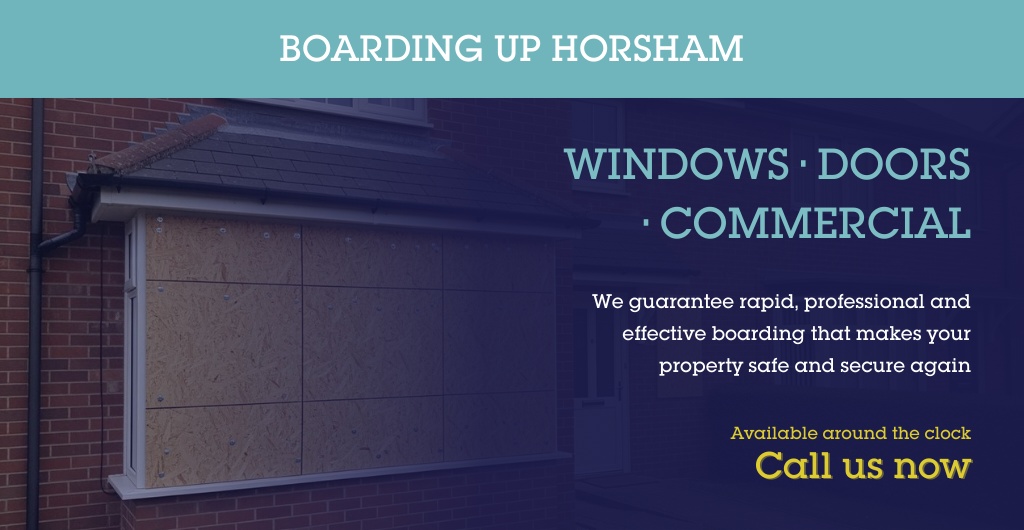
The van carries boarding stock and fixings. For most windows and doors we use exterior-grade plywood, typically 18mm, with OSB for smaller openings. Where security matters, we use anti-tamper fixings, and where the frame allows we fix in a way that limits further damage to it.
If a frame is too badly damaged to take boarding as it is, we’ll explain the options before doing anything. You agree the work before we begin, and the quote you’re given on the call reflects the number and size of openings, height and access, materials, fixing method, any door or frame securing, and any glass or debris to make safe.
Paperwork for your insurer
Once the property is secure, you’ll receive:
- An itemised invoice
- Time-stamped before and after photographs
- A written statement of the work carried out
This gives your insurer a clear record of what was done and why. The insurer decides what’s covered; we aren’t loss adjusters or legal advisers. Our insurance claims guide explains how to use this documentation alongside your claim.
What happens after boarding
Boarding is a make-safe. It keeps the building secure and weather-tight so you’ve got time to arrange permanent glazing or a replacement door properly, rather than rushing a decision on the night.
If it can’t wait
Some damage needs securing straight away, especially an open door, a ground-floor window or a shopfront at closing time. Our 24-hour emergency boarding up service covers nights, weekends and bank holidays, with a person answering the phone at any hour.
Talk to us about your property
Tell us your postcode, what’s been damaged and roughly how big the opening is, and send any photographs you’ve safely taken. We’ll talk you through access, the right approach and a free, clear quote before any work starts.